

There is a story I tell when I speak that usually makes a room pretty uncomfortable. I tell them about an incident at Bob Evans, but I don’t initially tell them who the person was. I describe what happened, the behavior, and the impact that behavior had on the people around her. Then I let the audience respond. People often have very strong opinions. She should have been arrested. She should have been charged. There should have been consequences. Someone behaving that way needs to be held accountable. And when all they have is the behavior in front of them, I completely understand why they come to those conclusions.
Then I tell them something they weren’t expecting: the woman was me. Suddenly, the room changes. Now they know more of the story. They know about the childhood trauma. They know about the domestic violence. They know about the brain injury. They understand more about a nervous system that learned survival long before it learned safety. They begin to understand that the behavior they just judged so harshly wasn’t coming from a woman who woke up wanting to hurt people. It was coming from someone whose brain and body had spent years adapting to trauma, danger, chaos, and survival. Almost immediately, people start looking at the situation differently. Maybe she needed help. Maybe someone should have recognized what was happening. Maybe punishment wasn’t the only answer. Maybe there should have been more compassion.
That shift fascinates me because nothing about what I did changed. The only thing that changed was their understanding of why I did it. The behavior was exactly the same. The people affected by it were still affected. Yet the moment the audience understood what was happening underneath that behavior, their response changed. That is one of the reasons I talk so much about understanding what happened inside someone because of what happened to them. Context matters. Trauma matters. Brain injury matters. Childhood experiences matter. The nervous system matters. Understanding those things can completely change the way we see another human being. But I have also come to believe that understanding cannot be where the conversation ends.
We tend to act as though we have to choose between compassion and accountability. Either someone’s behavior was wrong and they deserve consequences, or their trauma explains their behavior and therefore we should extend grace. But what if both things can be true? What if I can look at someone and say, I understand why you became this version of yourself, while also saying, You are still responsible for what this version of you does to other people? What if understanding isn’t supposed to erase accountability, but instead helps us understand what kind of accountability might actually lead to change?
That is where this gets uncomfortable for me personally, because yes, I experienced tremendous trauma, but I also caused trauma. Healing has required me to stop telling my story in a way that only allows me to be the person who was harmed. I financially hurt people. I verbally hurt people. I emotionally hurt people. I manipulated situations. I reacted out of fear. I pushed people away and then felt abandoned when they left. I said things that cannot be unsaid. I behaved in ways that affected people who had absolutely nothing to do with creating the wounds I was carrying. I wasn’t doing those things because I had a bad heart or because I woke up wanting to hurt people. Much of it came from survival patterns I didn’t even recognize at the time. But survival explains my behavior. It doesn’t erase its impact.
That distinction has become incredibly important to me. For years, I desperately wanted people to understand what had happened to me. I wanted them to see the abuse, the trauma, the brain injury, the childhood experiences, and everything happening underneath behaviors that even I didn’t understand at the time. I still believe that understanding matters deeply. Healing begins with understanding. But eventually, I had to ask myself a harder question: What am I supposed to do with that understanding once I have it? Because if understanding simply becomes another reason I don’t have to take responsibility for how I affect other people, then it isn’t really healing. It is just a more sophisticated excuse. Understanding should give us information. That information should eventually help us recognize what needs to change.
The deeper I have gone into my own healing, the more this has challenged the way I look at the people who hurt me, too. It is easy for me to look at my dad and my brothers and list the ways their behavior affected me. I can tell you what happened. I can tell you what it cost me. I can tell you about wounds I carried for decades because of choices other people made. But now I can also look farther backward. I remember my grandfather, and I remember what a mean and nasty man he could be. When I think about that, I find myself wondering what my dad learned growing up in that environment. What did his nervous system learn about anger, relationships, power, conflict, love, and safety? What did he experience that I don’t even know about? What behaviors did he learn from his father before he was ever old enough to understand that there might be another way to live?
Then I look at my brothers and ask the same questions. What did they learn from our dad? What was modeled for them? What became normal because it was familiar? The same way I developed behaviors from the environments I survived, they developed behaviors from theirs. None of that makes what happened okay. It doesn’t erase responsibility. It doesn’t mean people should remain in unsafe relationships, tolerate abuse, abandon boundaries, or allow someone unlimited access to their lives simply because that person’s behavior has an explanation. But it does mean I have had to confront something difficult: understanding cannot belong only to the people whose stories I relate to or whose behavior I am ready to forgive.
That realization has forced me to ask myself one of the hardest questions of my own healing: Is it fair for me to ask people to have compassion for the harm I caused because of what happened to me if I am unwilling to consider what happened to the people who caused harm to me? I don’t think that question has an easy answer, and I don’t think understanding another person’s trauma automatically means forgiving everything they did or restoring a relationship with them. But I do think it asks us to examine whether we are applying two different standards—one for our wounds and another for theirs.
I know what some people will say: But what they did was worse. And sometimes that may absolutely be true. There are different degrees of harm, different circumstances, different levels of danger, and different consequences. Understanding someone’s history does not require us to pretend that every behavior is equivalent. But that response still makes me ask another uncomfortable question: Where exactly is the line? Is physical violence the line? What about emotional abuse? Financial abuse? Verbal abuse? Manipulation? Humiliation? Control? Abandonment? Words can hurt just as deeply as fists, and sometimes the effects of those words last far longer than the bruises. I know there are things people said to me decades ago that lived inside my head long after any physical injury healed. I also have to accept that some of my words may have lived inside other people in exactly the same way.
So if I want someone to consider my trauma when they evaluate the worst versions of me, I have to at least be willing to consider the humanity and history of the people whose worst versions hurt me. That doesn’t mean reconciliation. Forgiveness does not require access. Compassion does not require proximity. Understanding does not require tolerating continued harm. And accountability does not require hatred. I can understand why someone became who they became and still decide that they cannot have a place in my life. I can forgive someone and maintain a boundary. I can have compassion for the wounded child they once were while protecting myself from the harmful adult they became.
Maybe that is where we have confused things. We think accountability means punishment. We think compassion means letting someone off the hook. We think forgiveness means pretending something didn’t happen. We think understanding means making excuses. I don’t believe any of those things anymore. I believe we can understand someone’s behavior and still hold them responsible for changing it. We can acknowledge the trauma that shaped someone without volunteering to become collateral damage from it. We can say, “I understand why you became this way, and I also cannot allow you to continue hurting me.” And perhaps most importantly, we can learn to say those same words to ourselves.
Today, I can look back at the woman in that Bob Evans and understand her in a way I couldn’t then. I can see what she couldn’t see. I understand the brain injury. I understand the trauma responses. I understand the nervous system that had spent a lifetime preparing for danger. I understand why she reacted the way she did, and I have enormous compassion for her. But I don’t have to pretend she didn’t hurt people in order to love her. In fact, loving her required something much harder. It required holding her accountable.
It required looking honestly at the behaviors she developed to survive and deciding which ones could no longer come with her. It required apologies. It required changed behavior. It required boundaries. It required accepting that some people she hurt might never forgive her. It required understanding that good intentions don’t erase someone else’s experience. Most importantly, it required me to stop confusing an explanation with an excuse. My trauma wasn’t my fault, but once I began to understand what it had taught me to do, I became responsible for deciding what I would continue carrying forward.
Maybe this is what real trauma-informed work should look like. We shouldn’t ask only, “What’s wrong with you?” We absolutely need to get better at asking, “What happened to you?” But I don’t think we should stop there either. Eventually, perhaps the questions become: “What happened to you? What did you learn to do because of it? Who has been affected by those behaviors? And what are you going to do now that you understand them?” Those questions leave room for someone’s story without erasing the stories of the people affected by their behavior.
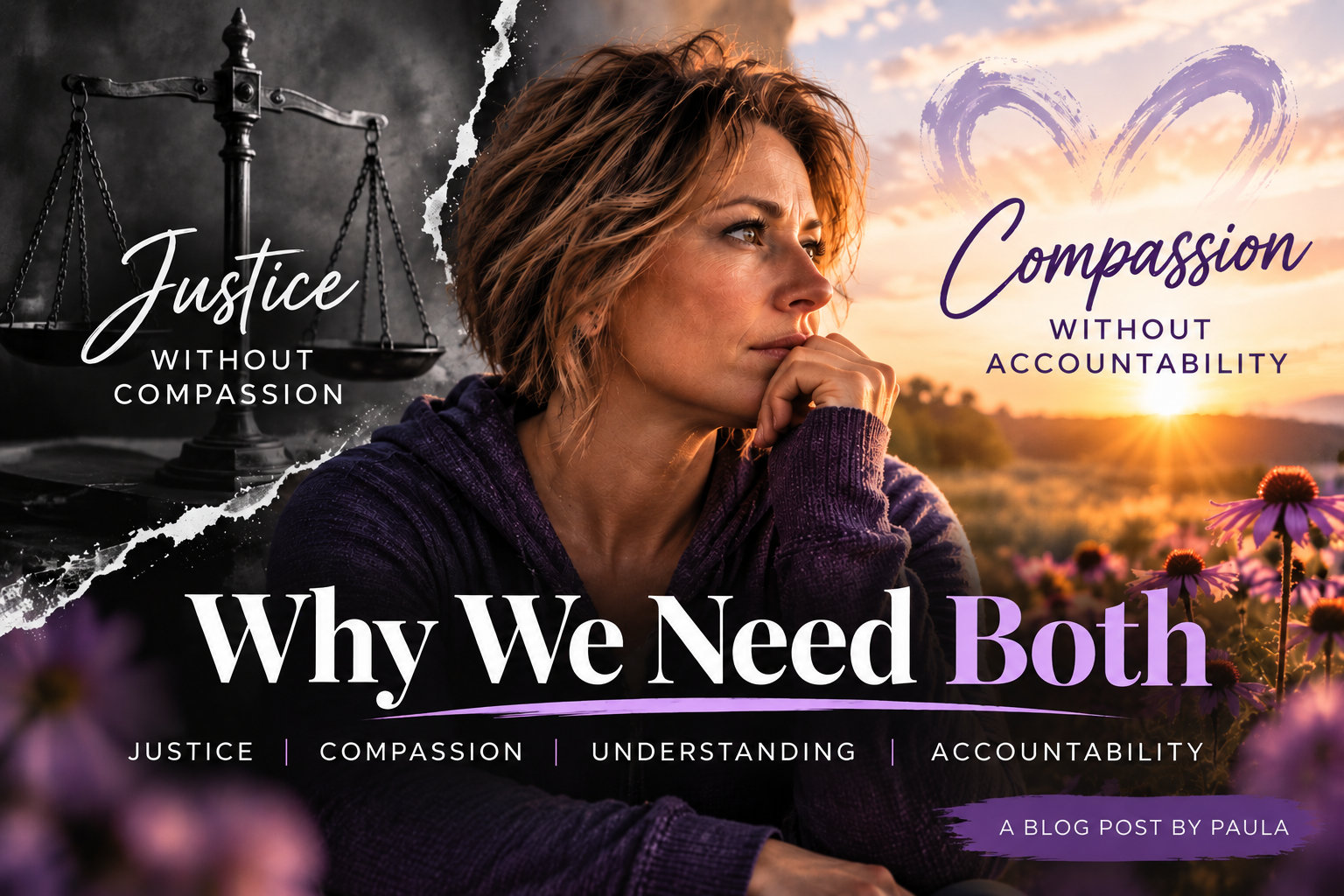
Because compassion without accountability can leave people trapped in the very behaviors that are destroying their relationships, their opportunities, and sometimes their lives. But accountability without compassion can bury wounded people underneath shame without ever helping them understand why they behave the way they do or showing them that another way is possible. We need both. We need enough compassion to understand the person and enough accountability to address the behavior. We need enough curiosity to ask what happened and enough courage to ask what happens next.
I don’t want people to hear my Bob Evans story and simply condemn the woman they first imagined. But I don’t want them to discover that woman was me and suddenly excuse everything she did either. I want them to understand her well enough to hold her accountable in a way that gives her an opportunity to become someone different.
Because I was her.
I can have compassion for why she became who she was.
I can take responsibility for the harm she caused.
And thankfully, I didn’t have to stay her.

Leave a Reply